
From Kraftwerk to Consulting - A Throughline

Kraftwerk 3-D The Catalog
Electronica Discovered. Electronica?
I re-discovered the pioneering electronica band Kraftwerk several weeks ago when I stumbled upon their monumental live album, 3-D The Catalog recorded during their celebrated residency at the Museum of Modern Art. I confess that prior to this, electronica was a closed book to me, conjuring as it did, visions of impossibly hip Europeans in settings that would elicit cautionary statements regarding its unsuitability for people prone to seizures. To my surprise, I found myself listening obsessively to this 34-track album on my desktop system while working on my projects – a thing I rarely do as music often intrudes on my ability to focus on the work. On the other hand, 3-D The Catalog not only allowed me to focus on my work, it actually seemed to enhance it, while providing the occasional break when I would look up, stunned by the precision, complexity, and beauty of a passage. Fast forward a few weeks, and I was sitting at the lounge in JFK, waiting to board a 14-hour flight to Delhi. My experience with this album in the last few weeks motivated me to search for other bands that might resonate as strongly as this one. A quick conversation with Copilot, and I was downloading a few albums from hitherto unfamiliar bands such as Metroland, Reakton, Maschine Brennt, Yello, and Komputer. My experience with this music and the subsequent uncovering of what I value in music, audio gear, writing, and work are the subjects of this essay.
HyperAudiophilism (yes, it sounds like a benign disease because it is)
Music and its reproduction via home audio systems are an integral part of my life. It took nearly three decades of trial and error, mediated by a gradual but steady increase in financial ability, to build a system that felt complete. By complete, I mean a system that leaves me wanting for nothing and reproduces music in all the ways that are meaningful to me – detailed, yet natural, capable of reproducing everything from 1950s jazz to 2000s electronica with equal facility, and, most of all, emotionally engaging (more on this last point later). Having finally arrived at my personal summit of audio reproduction, I have spent the last year almost completely ignoring it in favor of rapidly (but carefully) curated headphone systems. Compared to how long it took to assemble my main HiFi system, it has taken me a fraction of the time to assemble various headphone amplification systems with a stable of excellent headphones that gives me the freedom to explore and listen to music at will without being a constant source of irritation to my family.
For those unfamiliar with the intricacies of “head-fi”, there is a great deal of variation in the design and subsequently the sound of headphones aimed at the enthusiast market. Leaving aside the technical details of why this is so, let’s focus on what this means to a music lover and audiophile – it means that one can create synergistic combinations of amplifier and headphone, each optimized for specific genres of music, auditory preference, mood, and so on. In other words, rather than one “perfect system”, one can create multiple systems that each do a few things outstandingly well. An uncharitable (albeit true) description might be that it presents an opportunity to create a playground for the obsessive music lover / audiophile. This process of building my playground led me through the usual paths – headphones with varying impedance, dynamic and planar magnetic designs, open and closed back designs, amplifiers that are Class A or Class A/B, solid state versus tube OTL designs and many other variations. This process of discovery helped crystallize the values that matter to me – a distinct philosophy, a sense of place, craftsmanship that is honest but not showy, and above all, musical integrity that is infused with humanity – a sense that actual human beings cared deeply about what they had set out to accomplish, even if the end product might be less than perfect based on objective criteria.
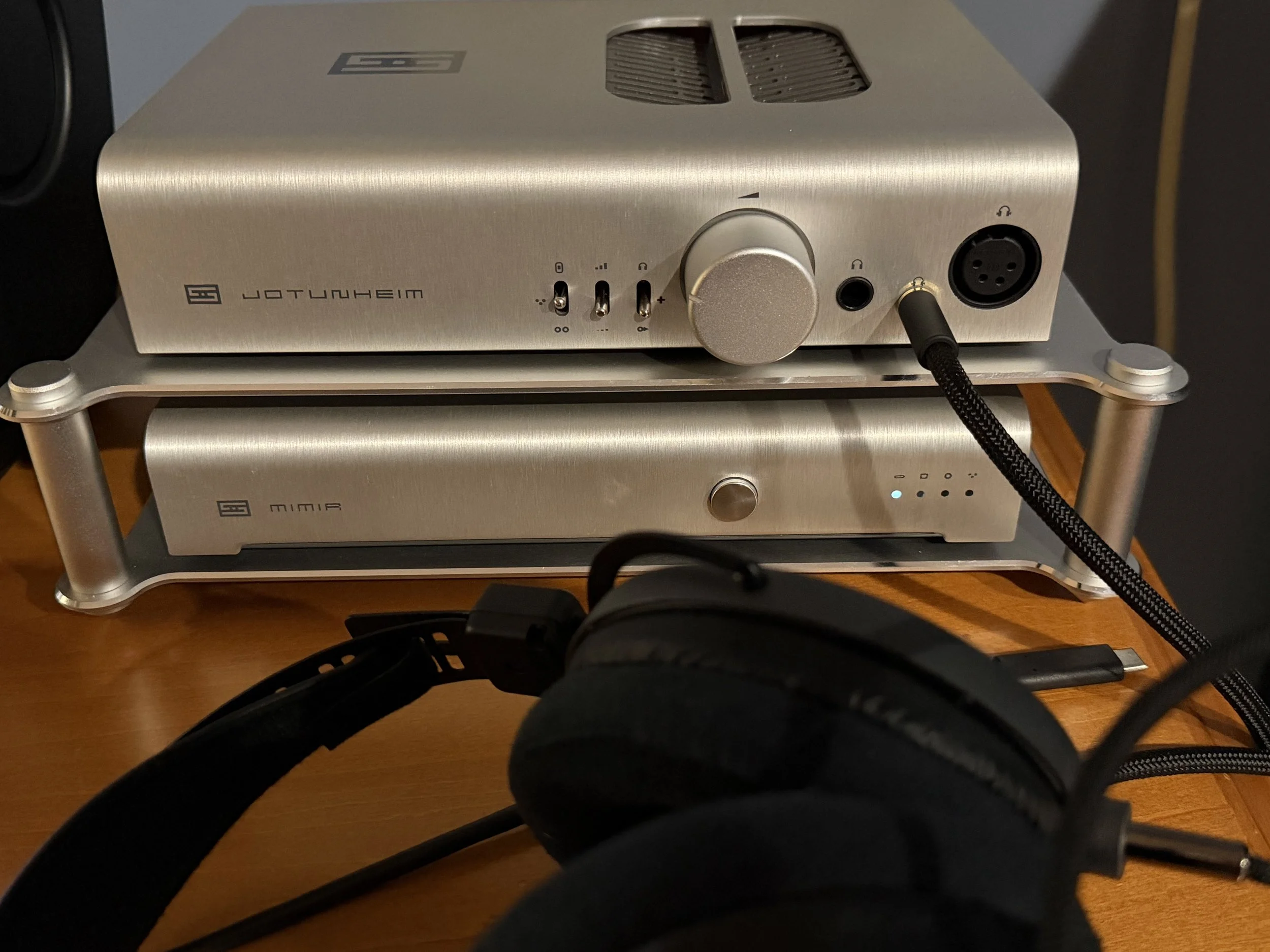
Schiit Mimir dac & Jotunheim 3 headphone amp
Electronica and the path to self-understanding
So, back to that airport lounge and Copilot’s recommendations. Using Kraftwerk’s 3-D album as the starting point, Copilot suggested several artists and recordings that inhabit the same aesthetic and emotional world based on assumptions about what it was that attracted me to that album. As it turned out, those assumptions were mostly right but incomplete. Copilot’s starting criteria were as follows:
Futurism
Atmosphere
Mid-tempo pacing
Non-techno (i.e., no dance club vibes)
However, quite a few of the recommendations either landed not at all or landed in an adjacent neighborhood not quite to my liking. It was revealing to explore the characteristics of albums that did not land at all. Tangerine Dream’s Phaedra, and Vangelis’ The Blade Runner, to take two examples did not land at all for different reasons – the former because it is all atmosphere, with no perceptible architecture and the latter, not because it is not beautiful (it is), but because in my mind, the music cannot be separated from the iconic visuals of the film. Yello landed initially with Touch but bombed completely with Point – I found the performances smug and unbearable. It was clear that my criteria needed extending. And so, a few more:
Melody
Hooks
Structure
Not smug or self-aware
Now, we were cooking! There was a definite improvement in the hit rate, and I downloaded several of the recommendations.
So, there I was with my new cache of albums – I listened to them voraciously over the course of the 14-hour flight to Delhi and over the next several days in Delhi and on a road trip to Rajasthan and then Agra. In a first for me, not once did I listen to my usual standbys – no Billie Holiday or Melody Gardot, no Monk, Mingus, or Coltrane, no luxuriating in the ECM catalog with Tord Gustavsen, Marcin Wasilewski or Tomasz Stanko, no classic rock, 80’s rock, no folk - nothing but electronic music.
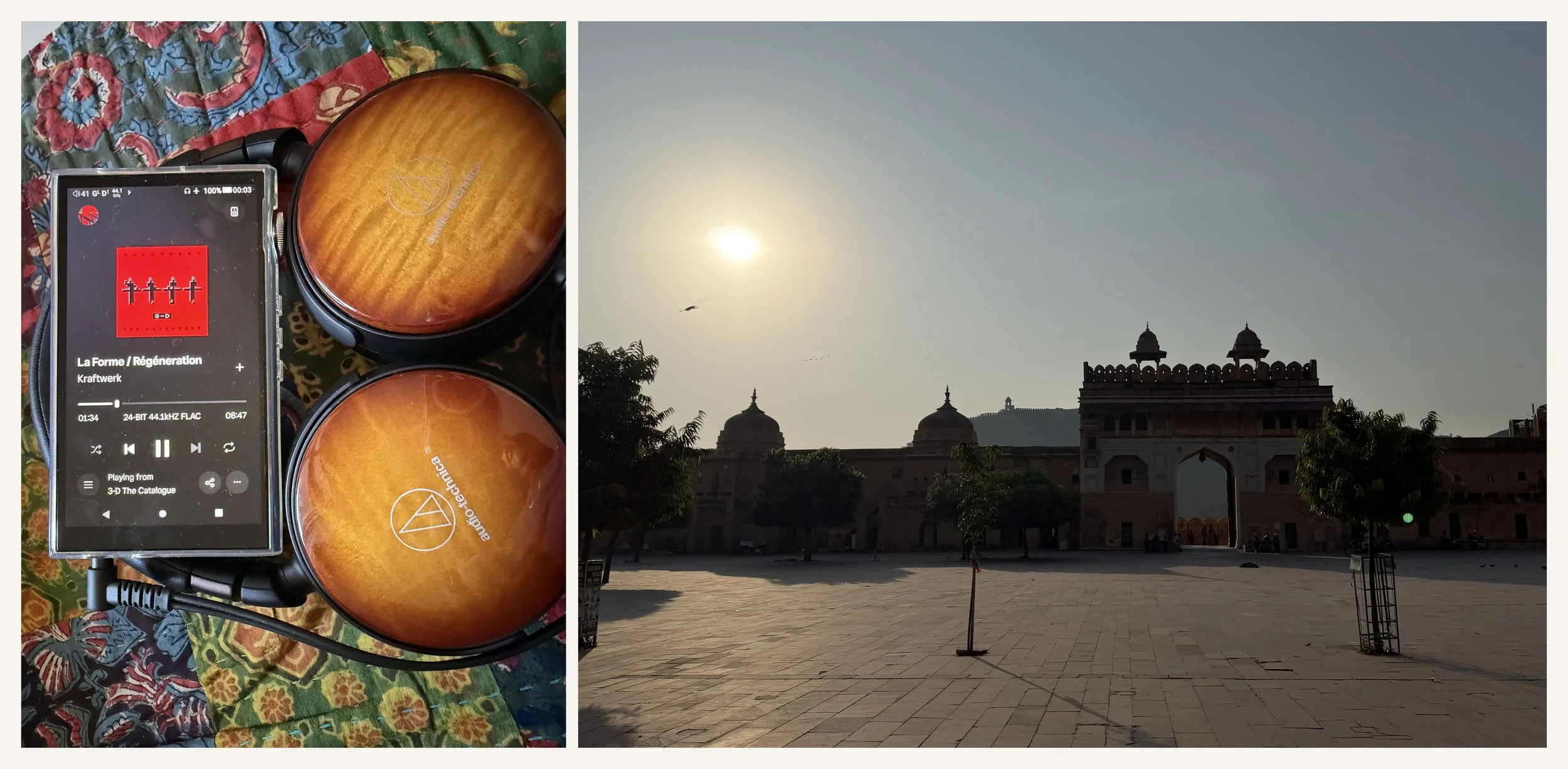
iBasso DX180, Audio-Technica WP-900, Courtyard of Amer Fort, Jaipur
There was clearly something going on here, that (as I write on the 12th day of this synth-fest) I still don’t fully understand. Why my re-discovery of Kraftwerk should lead to a monogamous relationship with a particular strain of electronica is a bit of a mystery. As far as I can tell, it is the atmosphere, hooks, and syncopation I respond to, and the shimmering energy that synthesizers seem capable of. The best of the albums create worlds in which I am content to wander, marveling occasionally at an electronic pulse or a synth chord but mostly just immersed in the overall soundscape. They convinced me there might be an entire continent adjacent to Kraftwerk. Not a continent populated by imitators, but by fellow travelers who shared similar fascinations with technology, systems, and civilization.
During this complete immersion, one thing was a constant – I would end each day’s listening by dipping into Kraftwerk’s 3-D The Catalog or one of their older albums, particularly, Trans Europe Express. I realized I was saving them for the end as one does with dessert or a favored dish on the dinner plate. Eventually, I arrived at the following realization – Kraftwerk’s music has, in addition to the criteria above, something that almost no one else does. It is a sense of wistfulness, and longing, best captured by the German word Sehnsucht – a feeling that what we are longing for was neither in the past nor will likely happen in the future – it is a sense of loss, but not quite since you cannot lose something you’ve never had. And then there is this – the 3-D album is widely regarded as the culmination of everything they have built towards starting with their pioneering work in the 70s – yet, I frequently return to the original Trans Europe Express because for all that it is a product of technological infancy (or perhaps because of it), it communicates its ideas beautifully, in a very human fashion. Try and imagine Freddie Mercury or David Bowie singing Hall of Mirrors or Showroom Dummies – they would turn them into performances. Instead, Ralf Huetter comes across as a thoughtful man musing aloud through an elegant piece of music. There is an ache in his voice as he repeats the refrain to Showroom Dummies that is the essence of Sehnsucht. That ache is absent in 3-D. The sound of breaking glass is visceral, and the dummies may be on the move, but they certainly don’t sound human as they do in TEE.
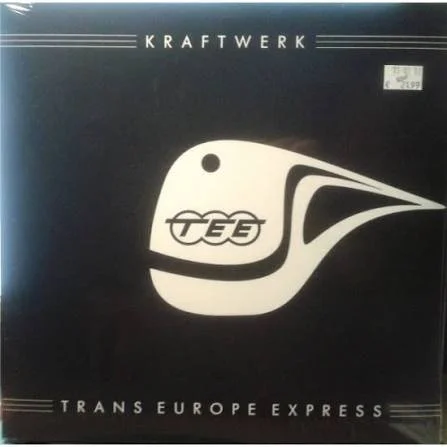
Kraftwerk: Trans Europe Express
One more thought, brought on by use of the word “elegant” just now. I used it quite intentionally but not in the sense of luxury, sophistication or polish. I think of elegance as something unforced, an absence of unnecessary effort and yet achieving great effect through restraint, clarity and mastery. On paper, TEE is almost absurdly simple – simple melody, simple lyrics, simple arrangement. And yet. It evokes civilization, travel, memory, possibility and longing. In doing so, it manages to create a world you want to inhabit – not just a set of songs you want to listen to. THAT is elegance.
This notion of elegance is, I think, related to the notion of Quality as described by Robert Pirsig in Zen and the Art of Motorcycle Maintenance, a book that I only recently realized has had a lasting influence on me, despite my having read it decades ago as a young adult. From that perspective, elegance is simply one manifestation of Quality, which, in the Pirsig sense is a union of care, craftsmanship, sincerity, discipline and purpose. I naturally lean towards work (of any kind) that has Quality and away from work that doesn’t. This probably explains my lack of interest in the punk movement with their deliberate celebration of freedom from mastery. Performative coolness leaves me cold because once you strip away the paint and the attitude, there is nothing there that I can respond to. This is the same reason innovation, disruption, “historical importance”, coolness or fashion are irrelevant unless the actual work has something in it that speaks to me. It is also why I find western criticism mystifying and almost always at odds with my personal experience – the things critics value are completely different from those I do.
The link between Kraftwerk and Everything Else
BOOKS
Let’s be clear about this – Isaac Asimov is an objectively bad writer. Yet, I have read his Robot and Foundation novels over and over and will continue to do so at periodic intervals till I lose the ability to read. Ian McEwan, on the other hand, is an objectively brilliant, gifted writer. Even though I don’t find all his work equally arresting, I cannot help being pulled across the finish line simply by virtue of his gorgeous prose. Murakami does not build worlds, nor does his translated work evoke the beauty of McEwan’s prose. Again, aside from his more inscrutable novels, it is hard to put down his books. The connecting tissue is again, Quality. All three writers convince you that you're in the presence of someone who has mastered their craft and is using that mastery in service of something larger than themselves. Asimov creates carefully imagined worlds, Murakami creates atmosphere, a sense of place and longing, while McEwan. What can one say about McEwan other than that his writing is literally the definition of craftsmanship – nothing wasted, nothing showy, nothing calling attention to itself and yet perfect.

Disparate Bedfellows
AUDIO EQUIPMENT
Let’s talk about headphones as my journey into this world is quite a bit shorter than my decades long one in the larger HiFi equipment world. When I started out roughly a year ago, I already had a few headphones that I rarely used – a Sennheiser HD 650, Shure SRH-1540, and an AudioQuest NightOwl Carbon. Once I decided that I was going to spend some serious time listening to headphones, I bought a Burson Soloist GT headphone amp – a superb, solid-state amplifier that does justice to pretty much any headphone in existence. Having such an accomplished amplifier on hand meant that I was now primed to rampage through the world of different headphone designs and brands and in short order I acquired several. I’ve had a wonderful time trying out (umm, buying) iconic designs such as the Sennheiser HD 660S2, the Audeze LCD-X as well as beautiful examples of Japanese craftsmanship such as the Denon AH-D9200 and American engineering expertise such as the Dan Clark Audio Aeon Core. I also acquired several other headphone amplifiers of varying designs - my plan was to build a coherent stable of headphones and amplifiers that served different genres and systems that I could choose from as mood dictated.
And then something happened that has completely upended this goal, at least as far as headphones are concerned. I recently came across a headphone from another iconic Japanese brand; a studio monitoring headphone by Audio-Technica called the R-70xa. I listened to it for a few hours and liked what I heard. What happened the following morning surprised me – as I was drinking my first cup of coffee, my first thought was that I couldn’t wait to get to my office so I could listen to the R-70xa. In the course of the next several weeks, it became the one headphone that I reached for, no matter the system or the type of music I was listening to. Whereas the Audeze LCD-X sounds effortless and massive, the DCA Aeon Core sounds technically perfect and balanced, and the Denon 9200 is a beautiful, luxurious sounding Japanese work of art, the R-70xa simply made music sound like I thought it should. There was no sense that I was wearing headphones, nothing emphasized, nothing missing - music simply presented itself as the main event. I fell so much in love with it that I knew I needed an Audio-Technica for my upcoming Delhi trip. The open back design of the R-70xa makes it an impractical choice for travel, so I ended up with the WP-900, a beautiful, portable headphone with hand-crafted maple wood cups and a colored but engaging sound profile. It turned out to be the perfect headphone to explore my new-found world of futuristic electronic music.
More importantly, I realized that my goal of building a stable of different types of “essential” headphones was flawed from the start. I don’t care if something is deemed important, or innovative or ground-breaking. Paraphrasing Duke Ellington, it don’t mean a thing if it ain’t got that “thing” – that thing being Quality. Quality doesn’t mean technical perfection (though it can). It doesn’t mean clinical neutrality or soundstaging ability, or sub-bass performance or any of the things people talk about in online forums. A headphone that has Quality transmits beauty and that is exactly what the Audio Technica headphones do (as do, albeit to a lesser extent, the Denon 9200 and the Sennheiser HD 650 and 660S2). Audio-Technica is a venerable, engineering driven company but it clearly has a distinct philosophy and carefully designed products that each capture some element of Quality that is important to the people behind them. They may not be everyone’s idea of the perfect headphone, but to me their products feel crafted rather than marketed, refined rather than optimized, and elegant rather than impressive.
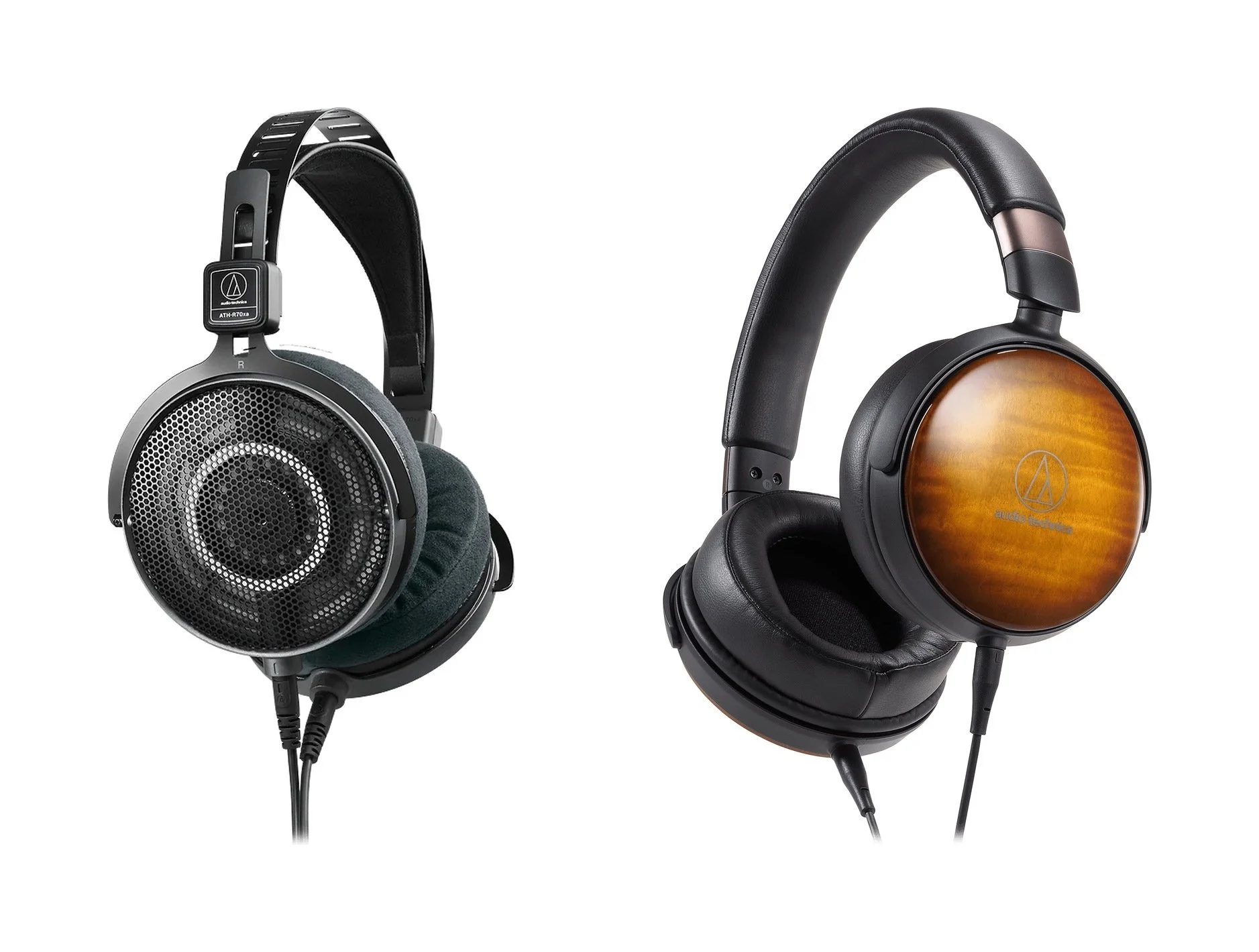
Audio-Technica R-70xa and WP-900
My affinity for Audio-Technica and Kraftwerk springs from the same source. Both combine technical mastery, discipline, and craftsmanship with an absence of performative coolness. Neither asks to be admired; both invite you to inhabit the worlds they create. Which is why my next headphone will be their flagship ADX-7000. And then their WB-LTD and perhaps AWAS. And yes, I will be selling most of my current stable.
ON WORK (!!)
Back when I went on capabilities presentations on behalf of my employers, a recurring question from prospective clients was what made us different. This always struck me as an odd question. Since we had prepared material to showcase our “unique offerings”, we would dutifully go through our dog and pony show, but what I really wanted to say was this – “I’m not sure what makes us different, but I can tell you what makes us good”. In fact, I believe I have said this to clients during more informal meetings. Business focuses on uniqueness because to them it signals excellence. It is also a way for them to justify their selection to upper management (“we evaluated a dozen vendors, and this one has the most differentiated offering”). Setting aside the question of whether there is truly anything new under the sun (at least in Market Research), difference is at most interesting. Quality, on the other hand, is enduring. The misguided focus on difference means that the vendor with the most creative pitch wins the project, not the one that would actually deliver Quality. I think my unease around this question comes from the same place – I am not a seeker of, nor do I understand, novelty for novelty’s sake. I am a seeker of Quality in the sense that Pirsig talked about. And everything else flows from that. My assessment of the R-70xa as “this is what music should sound like” is no different from my assessment of what good consulting should look like – it is neither unusual nor particularly differentiated – it is sincere, it has a sense of craftsmanship and at the end of the day, it just works.
“I’m not sure what makes us different, but I can tell you what makes us good.”
THE THROUGHLINE
Quality. Doing things well because you want to and the work deserves it. Caring. Creating beauty whenever you can. Craftsmanship. Discipline. Ultimately, this essay wasn’t really about Kraftwerk, or Headphones, or Consulting. Sorry for the scenic route, but I like ideas that emerge from doing and thinking about things that give me joy. What I have discovered on my journey through HiFi, and music, and books is that Quality appears in unexpected places as long as you are attuned to it. It doesn’t happen because a critic decrees it so. Critics call Made In Japan the best live album Deep Purple recorded. I happen to think that Made In Europe is far superior (listen to Ian Paice taking control after minutes of Blackmore’s silly noodling on You Fool No One and say it ain’t so). On a good system, the sound and the energy of the performance takes your breath away. Nothing on Made In Japan comes close. But, in critics’ eyes, MIJ features the favored MK2 lineup whereas MIE has the less favored MK3 lineup. That has nothing to do with the actual performance, and it only takes an honest listen to make the superiority of MIE abundantly obvious.
I am going to break with convention and end this essay with my Deep Purple aside rather than my conclusion that came before it. Critics be damned.
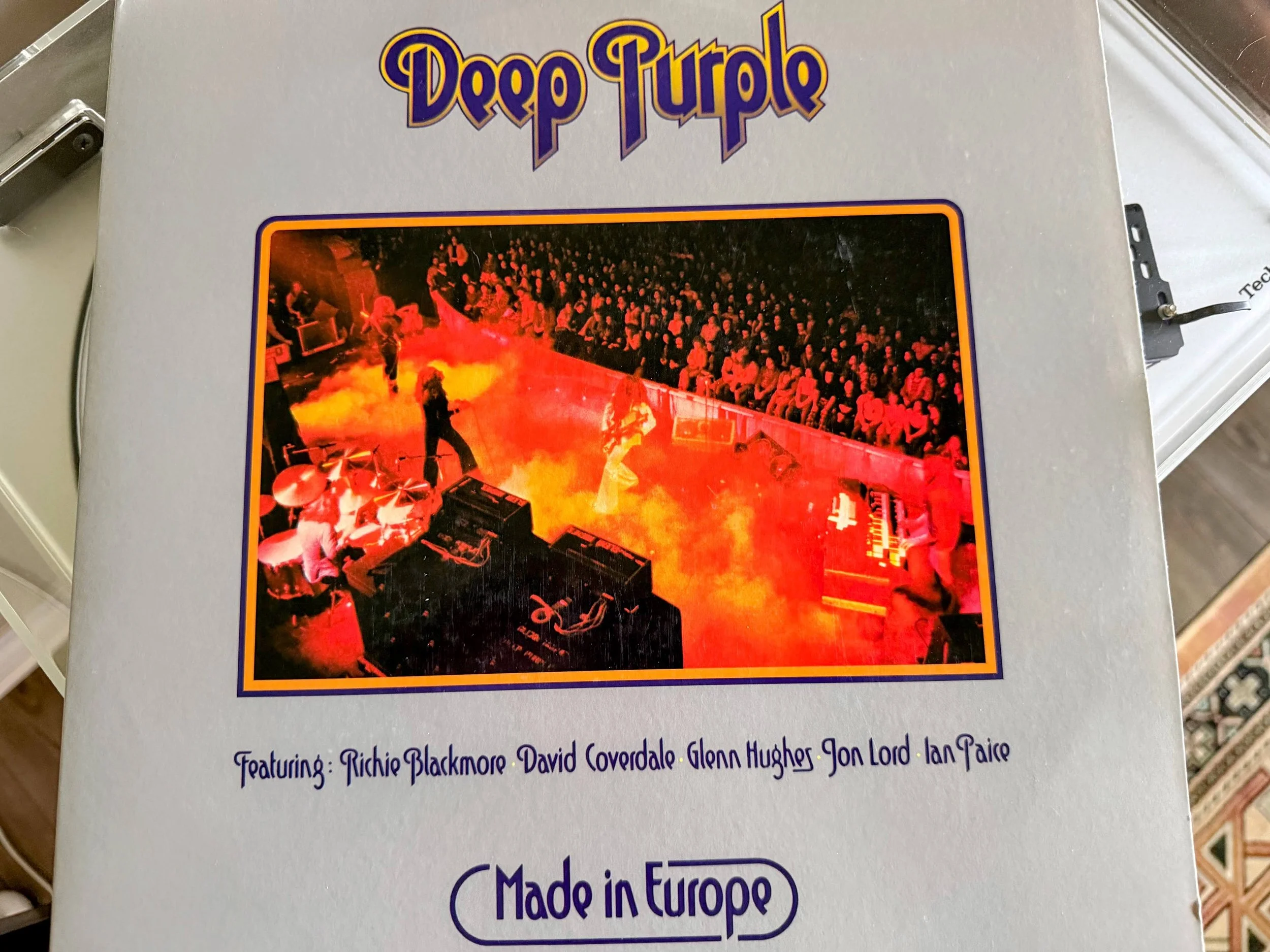
Deep Purple: Made in Europe