
The Sword is the Mind
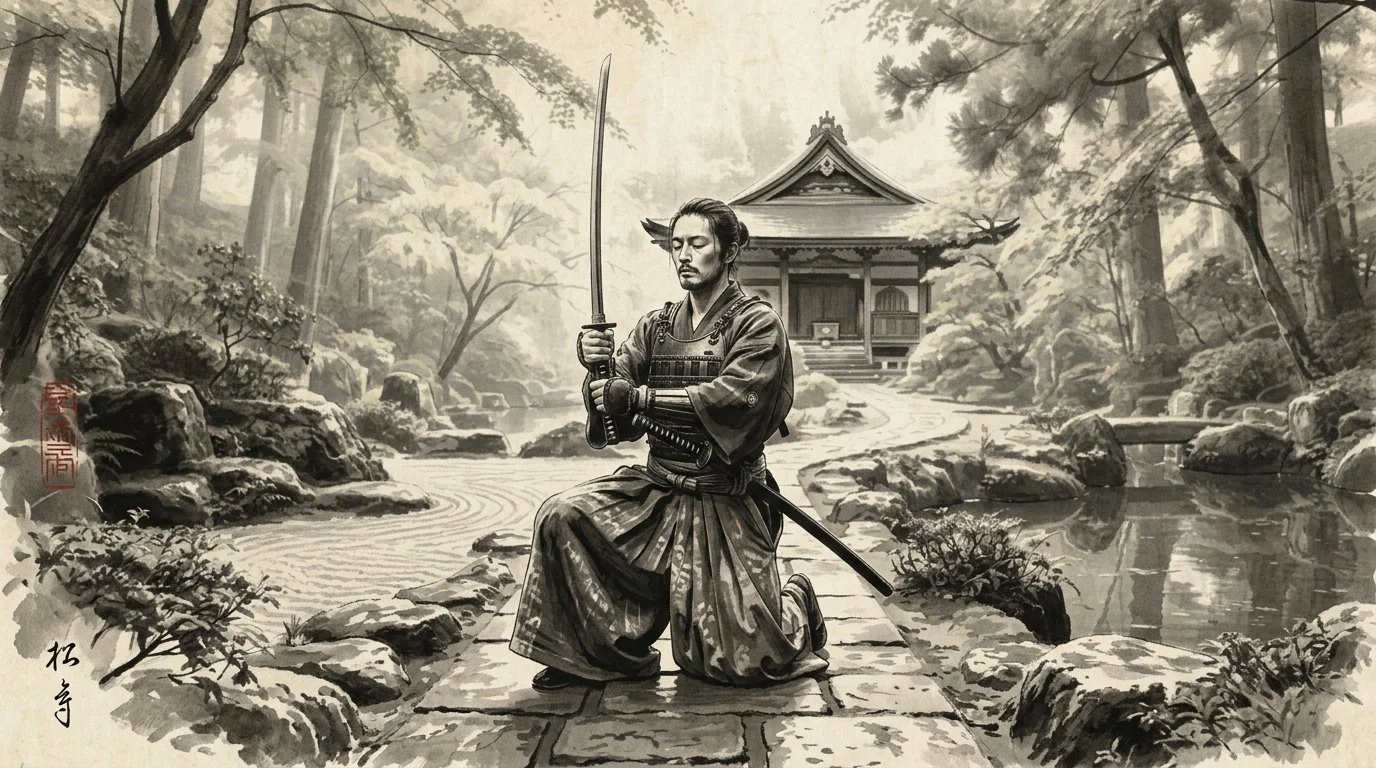
The sword is the mind.
If the mind is true, the sword is true.
If the mind is not true, the sword is not true.
Those who would study the sword must first study the mind.
- Toranosuke Shimada, Edo-period samurai and swordsman
This poem makes the point that true skill with the katana comes from inner discipline, focus, and clarity rather than raw violence. Samurai trained their minds through poetry and Zen philosophy just as they trained their physical strikes. This ensured that their greatest strength was found in stillness and control, mirroring the traditional saying, “A good sword is the one left in the scabbard”.
Time, The Ultimate Educator
I am fascinated by this idea that true skill in any discipline is more than the obvious manifestations of such skill – that is, it is more than the ability of a writer to put words together in a pleasing fashion, a composer to string together a catchy melody, or a samurai to strike down his opponents. True skill is characterized by clarity of purpose, thoughtfulness, perspective, AND of course, the raw ability to carry out what is necessary. Actually, “raw” ability isn’t quite right. It is ability that has been tested over time, nurtured and enhanced with a diversity of experience and continual refinement – it is far from raw. And this is the part that interests me most – not the prodigious skill of the child prodigy who dazzles at age 5 only to disappear without leaving a mark – but the veteran whose performance reflects a lifetime of experience and is a combination of effortlessness that belies the long years spent perfecting their craft and often (though not always) the modesty that comes from knowing that there is always room for improvement.
Billie Holiday will always be on my “desert island” list – however, not the Decca Records Billie where she became a star but the later, 1950s Verve version, in which you hear not merely a singer, but an entire life expressed in song. Her voice is frayed from a lifetime of hard living and pain, and the performance is striking for everything it isn’t – neither the glossy perfection of current-era jazz singers nor their facility with vocal gymnastics. No matter. Billie’s ability to wear each song like a custom-fit cloak or become simultaneously symbiotic with her band and yet remain miraculously singular is unsurpassed to this day. 1957’s All or Nothing at All double album is the pinnacle of that Billie and the one I reach for automatically and without hesitation when I want to enter her world of aching beauty.

Billie Holiday: all or nothing at all. Burson Soloist Voyager Max Headphone amplifier
Jiro Ono is a 100-year-old chef who until a few years ago operated a world-famous sushi restaurant called Sukiyabashi Jiro in a Tokyo train station. Apprentices at his restaurant spend up to ten years mastering rice preparation and basic tasks like wringing hot towels before they are ever allowed to touch fish or make sushi. Reading an article about him and his focus on perfection, and the clarity about what it takes to achieve, left me spellbound. Notice that the key word for the apprentices here is mastering. Mastery is not simply repetition, a mistake many make when they are quick to dismiss experience. It is repetition with intensity and focus, the kind of focus where you are constantly aware of your actions and the implications of every one of them. That sort of repetition leads to knowledge that is not merely gained but painfully acquired, like a patina, burnished, beautiful, and only fashioned into existence with the inexorable passage of time. And, like patina, it becomes part of who you are, influencing your actions, guiding you towards results that reflect your mastery.
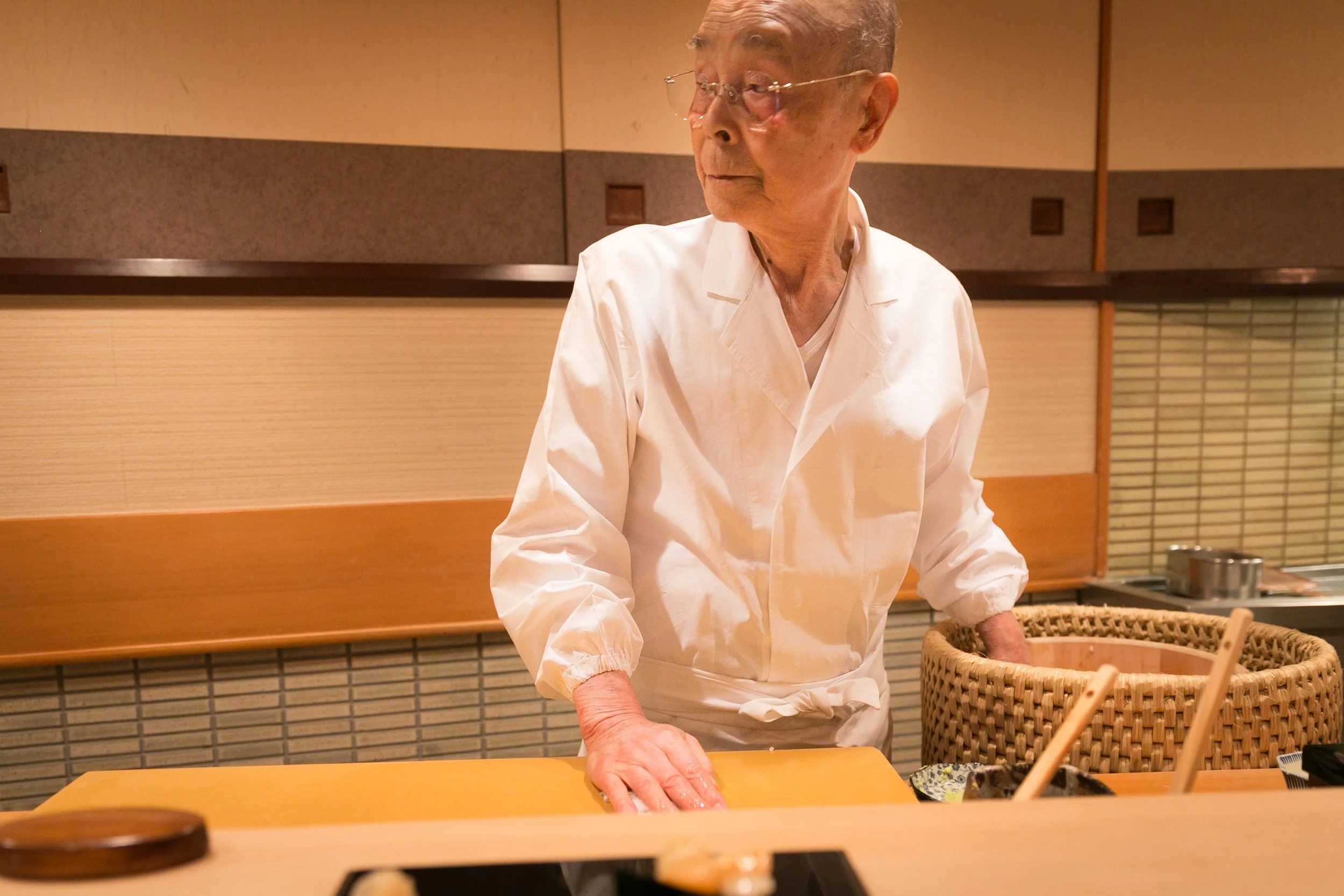
Jiro behind the counter
The marble craftsmen of Agra offer a profound example of tacit knowledge and hereditary expertise where training starts at a young age in homes that double as workshops. The path to becoming a master (Ustād) is long, starting in adolescence and continuing for well over a decade and covers multiple phases – observation and prep, developing visual symmetry and slicing delicate gemstones and finally chiseling and inlaying. On my recent trip to India, I visited the Taj Mahal for the first time in my life. Pictures cannot prepare one for the magnificence of the structure, its symmetry, and sheer, other-worldly beauty. The magnificence is not simply a function of its stupendous scale but of the intricate beauty of the work scattered seemingly casually across the entire monument like stars on the milky way – delicate lattice-work carved into solid marble, endless swaths of inlay that rival the precision of a modern CNC machine, optically-adjusted calligraphy that gradually increases in size as it goes higher up the walls so it appears completely uniform and the same size from the ground – this seventeenth century monument is a work of overwhelming human achievement. And at the heart of it all were the same inter-generational craftsmen that persist to this day, crafting examples of the skill that went into the creation of the Taj Mahal.
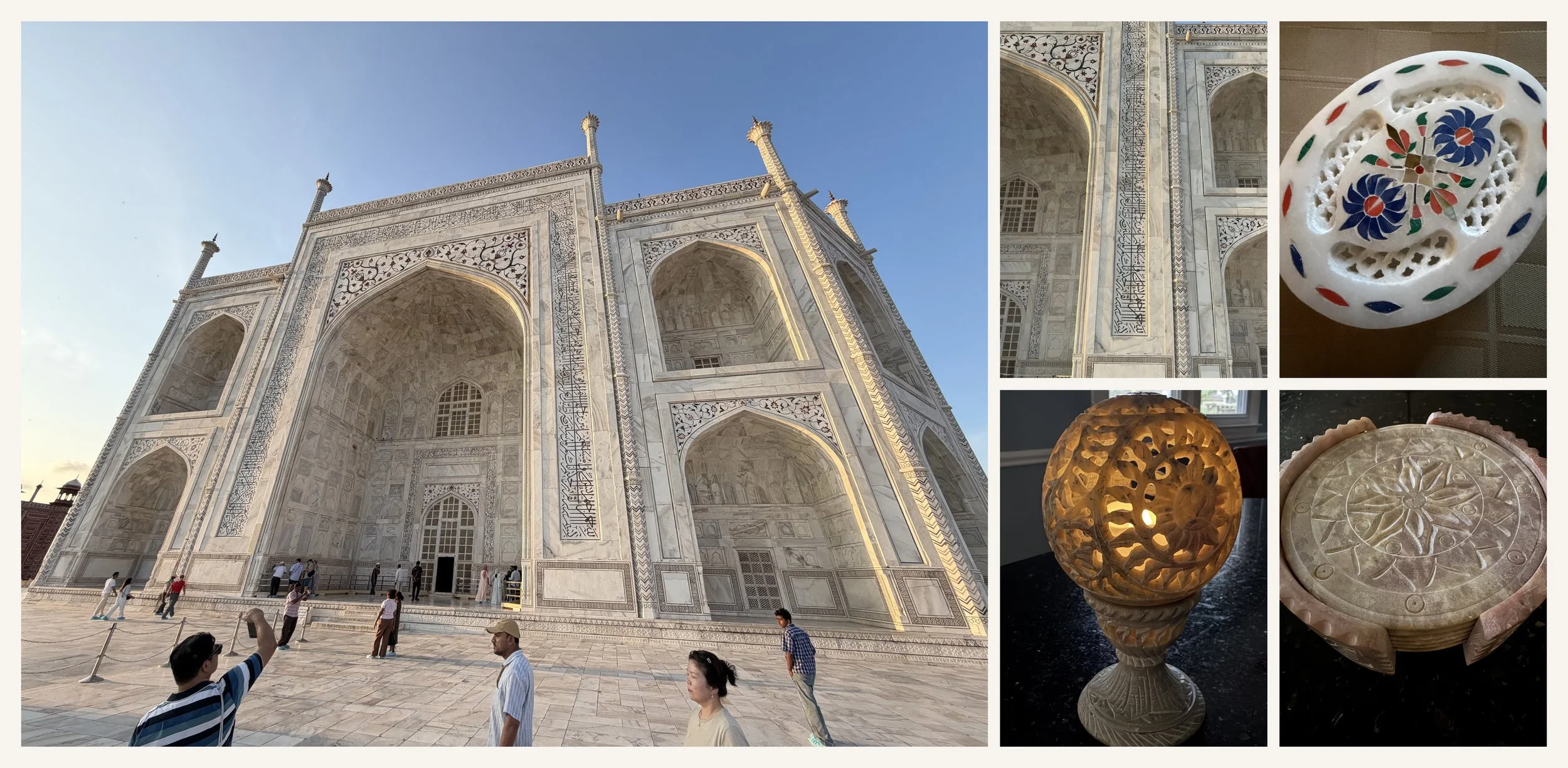
Taj Mahal, optically-adjusted calligraphy, inlay work and carvings from present-day craftsmen
Emergence of the Instant Expert
And that brings us (as always, sauntering along the scenic route) to the real topic of this essay – the emergence of the instant expert, who, regardless of actual qualification is confident about flaunting the outcome of a quick chat with their AI engine of choice as the product of their own repository of knowledge and ratiocination. They can quickly generate dense documents with pristine formatting, tables and charts and shoot them over to an unsuspecting recipient without a second thought. The recipient in turn, lacking the necessary expertise, feeds it into their favorite AI chat box, turning this into a dialogue with minimal human intervention – AI calling to AI, as it were, like mastodons across primeval swamps (to shamelessly steal a phrase from the incomparable P.G. Wodehouse).
Volume with Little Value
The output from these exchanges is no different from Soviet era absurdities such as the Nail Factory Paradox (if a nail factory's quota was tracked by the total number of nails, it produced millions of tiny, fragile, and completely useless nails. If the target switched to tonnage, the factory shifted to producing a small number of massive, heavy nails that were equally unusable). Let’s set aside the tantalizing question of whether incentives in the modern-day corporate world are as flawed as those of a centralized command economy (perhaps the subject of a different essay) and focus instead on expertise and quality. Needless to say, the volume of output belies the fact it was initiated by someone with no real expertise in the subject and therefore with no ability to verify the quality or indeed, accuracy of the seemingly impressive work generated by a pattern recognition engine.
The Client and the Consultant
There is an additional aspect to this instant expertise problem when one adds the asymmetric relationship between client and vendor into the mix. This one hits closer to home because my entire business is predicated on being an expert in advanced analytics for market research – an expertise earned the hard way, over the course of nearly three decades. To the instant expert, of course, my expertise is a distinction without a difference. They feel empowered to poke holes in my methodology, suggest alternatives, generate code that is “better”, all aimed at demonstrating their expertise. This subverts the relationship completely, making a productive and collaborative partnership impossible. I have long argued that the best clients are the ones who are knowledgeable and experienced in the methodologies they rely on – but, as users, not as methodologists themselves. Using AI to don the mantle of expertise is as pointless as a peasant swinging a katana – he is more likely to harm himself than to pose a threat to anyone else.
AI as Assistant, not Oracle
Time to take a breather from the rant and state something I should have mentioned at the outset – I think that AI constitutes one of the greatest productivity enhancing tools since the personal computer. I depend on it routinely for its ability to synthesize large amounts of information, make sense of complex documents and in crafting emails where several complex ideas need to be communicated to a non-technical audience. Claude, in particular, has become increasingly indispensable given its ability to almost preempt my thoughts and give me exactly what I need in specific instances. My issue is not with using AI per se, but with using it as a substitute for expertise in situations where the real thing is not optional. I can cite several instances where my knowledge and experience were instrumental in getting the right information from my friendly, synthetic intelligentsia.
These instances range from incorrect conclusions drawn due to an incomplete understanding of a particular problem, to a complete lack of knowledge of industry norms that are divergent from a textbook solution.
Very often the wrong answer looks correct on its face: fluent, confident, well argued. It takes someone with the necessary expertise, experience, and perspective to tell the difference.
Sometimes, the information can be accurate but nevertheless requires nuance in interpretation or use. Claude once argued for adding a statistical caveat to an email I was sending. On the statistics, it was right. I left it out anyway, because it would have confused the reader and served no purpose. Knowing what not to say is part of mastery too. The good sword stays in the scabbard.
Going back for a moment to the craftsmen of Agra who transmit skills passed on from master to apprentice that is never written down. The philosopher Michael Polanyi’s phrase for it is “we can know more than we can tell.” It is precisely what a model trained on text cannot absorb.
With that, let’s reframe Toranosuke Shimada’s poem for our age:
AI is the sword is the mind.
If the mind is true, AI is true.
If the mind is not true, AI is not true.
Those who would rely on AI must first study the mind.
And now, a postscript that is almost too pat. Claude reviewed the essay and suggested that my version of the poem had the intent of the original backwards and offered a fix – namely, that AI is the sword. Which of course misses the point entirely. The poem doesn’t say the sword is the weapon. It says the mind is. It took a human reader to see that.